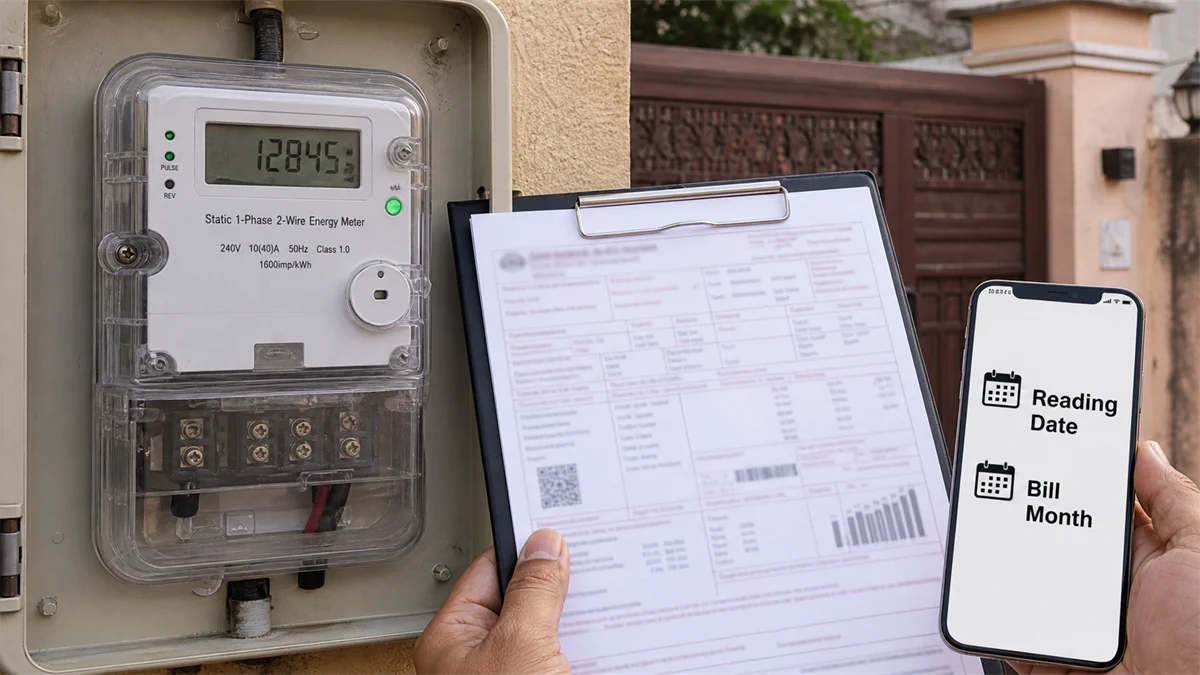
When a GEPCO bill feels higher than expected, most people jump straight to the total amount. I get it. That is the scary number. But before blaming taxes, slab rates, or the AC, check something quieter on the bill: the meter reading date, billing month, previous reading, current reading, and units consumed.
These fields tell the story of the bill. They show which period was measured, how many units were counted, and whether the bill roughly matches your actual usage. Once you understand this section, a GEPCO bill stops looking like a mystery paper and starts looking like a record you can question with confidence.
Quick Answer
On a normal GEPCO bill, units consumed are usually calculated from current reading minus previous reading. The meter reading date is when the current reading was recorded. The billing month is the bill label, not necessarily the exact first-to-last date of your electricity use.
Billing Month Is Not the Same as Calendar Month
If your bill says May 2026, it does not always mean electricity used from May 1 to May 31. The billing month is a label used in the billing cycle. Your actual measured period depends on the previous and current reading dates. For many consumers, the reading date falls somewhere in the month, and the bill is issued later.
This is why two neighbors can receive bills for the same billing month but with different reading dates or slightly different issue dates. GEPCO covers a large service area, and meter reading is done by routes and batches. A house near Satellite Town, a shop in Wazirabad, and a village connection near Kamoke may not be read on the same day.
Where to Find Reading Date on the Bill
On the bill, look near the top information area where bill month, issue date, due date, reading date, previous reading, present/current reading, and units are printed. The exact layout can vary slightly, but the reading-related fields are usually grouped close together.
If you only have the reference number or customer ID, open your latest duplicate bill through the GEPCO bill checker. GEPCO's official duplicate bill page also points consumers to the 14-digit reference-number lookup route, while the PITC portal is commonly used for the duplicate bill display.
Previous Reading, Current Reading, and Units
The basic idea is simple. The previous reading is the number recorded in the last billing cycle. The current reading is the number recorded this time. Subtract the previous reading from the current reading, and you get the units consumed for the period.
Simple example
Previous reading: 12,000
Current reading: 12,245
Units consumed: 245 units
Most domestic bills are understood this way. Some cases can be more complicated: meter replacement, defective meter, net metering, multiplying factor, arrear adjustment, or official correction. But for an ordinary single meter, previous-to-current reading is the first place to check.
What Is Reading Date?
The reading date is the date on which the meter reading is recorded for billing. NEPRA's Consumer Service Manual discusses meter reading, billing, bill particulars, and delivery rules for distribution companies. The key consumer point is this: your bill should show enough information for you to understand the billing period and check whether the reading makes sense.
If the reading date is much later than usual, the bill may include more days than you expected. If it is earlier, the bill may include fewer days. That can make month-to-month comparison misleading. A 32-day reading cycle and a 27-day reading cycle should not be judged exactly the same.
Issue Date and Due Date Are Different Things
The issue date is when the bill is generated. The due date is the last date to pay the normal amount. The reading date usually comes before the issue date. If you are checking whether units are correct, focus on reading date and readings. If you are checking whether you must pay late payment surcharge, focus on due date.
For payment timing and late payment rules, read our separate GEPCO due date and disconnection guide. Mixing these dates is a common reason people misread the bill.
Why Units Can Jump Even Without a New Appliance
Sometimes units rise because usage really increased. Gujranwala heat can do that without mercy. A fridge compressor runs longer, the water motor is used more, and the AC creeps from "just one hour" to "bas thori der aur." But sometimes the jump has another reason: longer billing period, previous low reading, meter access issue, wrong reading, or delayed adjustment.
Before filing a complaint, compare three bills, not just one. Check reading dates, previous and current readings, and units. If last month looked unusually low and this month looks high, the two-month average may tell a calmer story.
How to Check the Meter Yourself
You do not need to be an engineer. Stand near the meter safely, do not touch wires, and note the number shown on the display. For a digital meter, wait for the relevant kWh reading screen if the display rotates. Take a clear photo with date and time. Then compare it with the current reading shown on the bill.
If the bill current reading is higher than the live meter reading after the reading date, something may be wrong, unless the meter display you photographed is not the correct import kWh reading or there is another technical factor. If the live meter reading is slightly higher than the bill, that is normal because electricity continued to be used after the reading date.
Meter Reading Photo and Proof
When you suspect a wrong reading, collect proof before complaining. Take a photo of the meter display, meter number, latest bill, and any previous bill that helps show the pattern. Keep the reference number visible. If your meter is behind a locked gate or inside a box, make sure the reader can access it on reading days. A locked meter area can create avoidable trouble.
For overbilling, wrong reading, faulty meter, or power outage issues, use our GEPCO complaint guide. A complaint with photos and bill copies is stronger than a complaint that only says "bill zyada aa gaya."
Protected Status and the 200-Unit Problem
Reading date also matters for consumers trying to stay around 200 units. If the cycle is longer, your units may cross a slab even when daily usage did not change much. The protected/unprotected rules have their own conditions, but the unit count still begins with the reading section of the bill.
If your household often sits near the 200-unit line, keep an eye on daily usage after the meter reading date. Our protected vs unprotected consumer guide explains why a small unit difference can feel much bigger in the final amount.
Checklist for Reading-Related Bill Confusion
- Check bill month, reading date, issue date, and due date separately.
- Subtract previous reading from current reading.
- Compare the result with units consumed on the bill.
- Check whether the billing period is longer or shorter than usual.
- Take a fresh meter photo if the reading looks wrong.
- Compare at least two previous bills before assuming overbilling.
- File a complaint with meter photo and bill copy if the numbers still do not make sense.
Final Advice
Do not judge a GEPCO bill by the total amount alone. Start with the reading date and units. Those two lines often explain why the bill changed. If the units are correct, then you can move to slabs, taxes, FPA/FCA, QTA, arrears, or surcharge. If the units are wrong, the rest of the bill is already standing on shaky ground.
My practical habit is to take a meter photo once a month, especially in summer. It takes ten seconds. Later, if the bill looks strange, that photo can save you from guessing, arguing, and making three unnecessary visits to the office.
References and source notes
1 NEPRA Consumer Service Manual, revised 2025: used for meter reading, bill particulars, billing, delivery, and consumer complaint context. View NEPRA PDF
2 GEPCO official duplicate bill page: used for official bill lookup and reference-number context. View GEPCO bill page
3 PITC official GEPCO bill portal: used as the duplicate bill lookup destination for checking the latest bill details. View PITC portal
Frequently Asked Questions
Why is my GEPCO billing month different from my usage dates?
Billing month is a cycle label. Your actual measured usage depends on the previous and current meter reading dates printed on the bill.
Can I calculate units myself?
Yes. In a normal case, subtract previous reading from current reading. If there is meter replacement, MF, defect, or correction, the bill may need closer checking.
What should I do if the reading is wrong?
Take clear photos of the meter and latest bill, compare previous bills, and file a complaint with the concerned GEPCO office or official complaint channel.