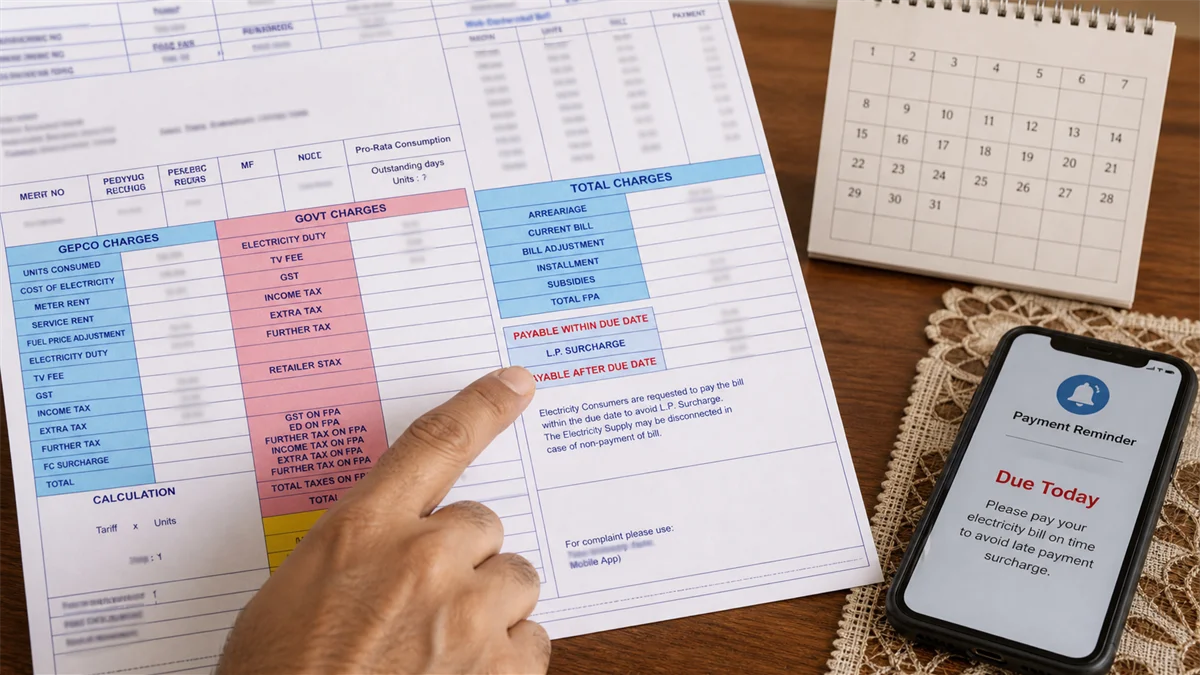
A high GEPCO bill usually arrives at the worst time. School fee is due, rent is due, someone is travelling, or the bill photo reaches you on WhatsApp two days before the due date. If you live in Gujranwala and often move between Lahore and Islamabad, you already know the feeling: the paper bill is at home, but the payment pressure follows you.
This guide explains what to do when the GEPCO bill is difficult to pay in one go. It covers installments, due date extension, late payment surcharge, disconnection notices, and what to keep with you before visiting the concerned office. I have kept the wording practical, because in a real billing problem you need clear steps, not vague advice.
Quick Answer
GEPCO bill installments or due date extension may be allowed through the official DISCO process, but they are not automatic. Request help before the due date where possible, keep your bill and CNIC with you, and ask for the computerized revised bill or official record. NEPRA's Consumer Service Manual says LPS is not imposed where the due date is extended, and computerized bills should be generated after installments or due date extension are allowed.1
First, Check the Latest Bill Amount
Before asking for installment or extension, open the latest bill and confirm three things: the reference number, the due date, and the amount payable after due date. If you are using a screenshot from someone at home, make sure it is the current month bill and not an older saved image.
You can open the bill through our GEPCO bill checker, GEPCO's official duplicate bill page, or the official PITC billing portal. GEPCO's duplicate bill page asks for the 14-digit numeric reference number and notes that all branches of all commercial banks are authorized to collect electricity bills.2
Can GEPCO Give Bill Installments?
Yes, installment handling exists in the official consumer-service framework, but the final approval depends on the concerned office and your bill status. NEPRA's Consumer Service Manual has a section on due date extension and installments. It explains how installments are treated, how LPS/markup can apply, and that computerized bills should be generated after installments are allowed.1
Practically, the better time to request installment is before the due date, especially when the current bill is unusually high because of arrears, FPA/FCA, a reading jump, or a seasonal usage spike. If the bill is already late, still contact GEPCO, but expect the office to check arrears, late surcharge, and previous default history.
Documents to Take for Installment or Extension
- Latest GEPCO bill copy or duplicate bill print.
- 14-digit reference number or customer ID.
- CNIC copy of the consumer/applicant where required.
- Payment receipt if you already paid part of the amount.
- Meter photo if the bill looks high because of wrong reading.
- A short written request for installment or due date extension.
- Any previous GEPCO complaint number if the bill is disputed.
Keep the request simple. Something like this is enough: "Please allow installment or due date extension for the current bill due to high payable amount. Reference number: 12345678912345." The office may use its own form or system, but a clear request helps you explain the case without confusion.
Where to Go and How to Get Approval
For installment or due date extension, do not go to a bank branch, mobile shop, or wallet agent first. They can usually collect the amount shown in the billing system, but they cannot approve a GEPCO installment plan for you. Start with the concerned GEPCO subdivision, revenue office, or customer service/facilitation counter shown on your bill.
If you are not sure which office handles your bill, check the division/subdivision and contact details printed on the bill. NEPRA's manual says the electricity bill includes division, sub-division, feeder, complaint contact, XEN/SDO contact, and addresses of concerned offices.1 That is the office trail you should follow.
Approval Flow in Simple Steps
- Open or print the latest bill and note the reference number, due date, payable amount, and arrears.
- Visit the concerned GEPCO subdivision/revenue office named on the bill, preferably before the due date.
- Ask the billing/revenue counter for "bill installment" or "due date extension".
- Submit the bill copy, CNIC, and a short request. If the bill is disputed, attach meter photo or complaint proof.
- Wait for approval from the competent officer. The counter staff may forward the case instead of approving it themselves.
- Ask for the revised/computerized installment bill, extended due-date bill, or clear official payment instruction.
- Pay according to that revised bill or instruction, then save the receipt.
This last step is important. NEPRA's manual says installments on the bill are amounts allowed by the competent officer, and that the DISCO shall generate computerized bills after allowing installments or due date extension.1 So if someone only says "pay this much" verbally, ask for the proper bill, reference, or written/printed confirmation before you rely on it.
Due Date Extension vs Installment: What Is the Difference?
A due date extension gives you more time to pay the bill. An installment splits payment into parts. They sound similar when you are short on cash, but they are handled differently. If only a few extra days are needed, extension may be enough. If the amount is too large to pay at once, installment is the more relevant request.
NEPRA's manual says LPS shall not be imposed where the due date is extended. For installments, it explains that if a current month bill is allowed in installments and the first installment is paid within due date, no LPS or markup is charged on the first installment; remaining installments are handled under the manual's markup/installment rules.1
What Happens If You Miss the Due Date?
If you pay after the due date, Late Payment Surcharge can be added. NEPRA's bill-description table defines LPS as the amount levied due to non-payment within due date, and the payable-after-due-date amount is the normal payable amount plus LPS.1
Current GEPCO tariff terms notified through NEPRA include an updated LPS structure: 5% may be levied for the next three days after the due date, and thereafter 10% LPS may be charged on the amount billed excluding government taxes and duties.4 Always use the amount shown on your latest bill or bank/wallet screen before paying.
Before You Pay Late
- Refresh the bill amount in your bank or wallet app.
- Confirm whether the app is showing before-due-date or after-due-date amount.
- Save the receipt immediately after payment.
- If the bill is disputed, file a complaint and keep the complaint number.
Will GEPCO Disconnect Electricity After One Unpaid Bill?
NEPRA's Consumer Service Manual is very important here. It says a connection shall not be disconnected if a consumer fails to deposit the current month bill, provided there are no outstanding dues. It also says no connection shall be disconnected on default of one month bill.1
But this does not mean you can ignore the bill. If the previous month bill is unpaid, the DISCO should issue a clear seven-day notice along with the second month bill, asking the consumer to clear outstanding dues with the second month bill or face disconnection. The notice may be printed or stamped on the electricity bill.1
If Installments Are Approved, Do Not Miss Them
Installment approval gives breathing room, but it also creates a schedule. NEPRA's manual says power supply of consumers allowed to pay in installments shall not be disconnected while installments are being paid. However, if the consumer defaults in paying installments, supply may be disconnected without further notice and restored only after receipt of minimum required dues.1
So after approval, treat installment dates like due dates. Save the revised bill, payment receipts, and screenshots. If you travel often, set reminders on your phone. It is much easier to pay an installment on time than to deal with disconnection and reconnection formalities later.
What If the Bill Is Wrong?
If the bill is high because of wrong reading, arrears, meter issue, or a suspected billing mistake, do not rely only on installment. First understand the bill. Read our GEPCO bill reading guide and GEPCO taxes and adjustments guide to identify where the amount came from.
If the issue still looks wrong, file a complaint with the meter photo, bill copy, and reference number. NEPRA's manual says power supply of a defaulting consumer shall not be disconnected where a wrong-billing or payment-dispute complaint/petition is lodged with NEPRA and restraining orders have been issued, but the consumer must continue to pay current bills regularly.1
Online Wallets and Partial Payment
Most bank and wallet bill-payment screens are designed to fetch the biller amount. Some apps may not support partial payment the way a GEPCO office can handle an approved installment or revised bill. Before trying partial payment through a wallet, check whether the biller allows it and whether the payment will actually settle the intended installment.
For normal payment steps, see our GEPCO online payment guide. If GEPCO has issued a computerized installment bill or revised amount, pay exactly what the official bill/payment screen shows and keep the receipt.
Simple Action Plan
- Open the latest duplicate bill and confirm the amount.
- Check whether the issue is high usage, arrears, taxes, FPA/FCA, or wrong reading.
- If you need time, contact the concerned GEPCO office before due date.
- Ask clearly for due date extension or installment, whichever fits the problem.
- Get the revised/computerized bill or official instruction before paying.
- Pay every approved installment on time and save receipts.
- If there is a billing mistake, file a complaint and keep the complaint number.
Final Advice
If your bill is high but correct, installment or due date extension can reduce immediate pressure. If your bill is high because of a mistake, treat it as a complaint first. In both cases, keep a record. Bill copy, CNIC, complaint number, revised bill, and payment receipts are boring things until you need them.
For households in Gujranwala, the best habit is to check the bill online early in the billing cycle. Do not wait for the paper bill to move from the gate to the TV lounge to someone's WhatsApp. A few early minutes can save surcharge, office visits, and unnecessary tension.
References and source notes
1 NEPRA Consumer Service Manual, revised 2025: used for due date, bill delivery, LPS definition, due date extension, installment handling, non-payment notice, disconnection, installment default, wrong-billing dispute, and reconnection rules. View NEPRA PDF
2 GEPCO official duplicate bill page: used for 14-digit reference number guidance and official commercial-bank bill collection note. View GEPCO page
3 PITC official GEPCO bill portal: used as the official duplicate bill lookup destination for verifying the latest bill before payment. View PITC portal
4 NEPRA GEPCO tariff page and S.R.O. 1160(I)/2025 listing: used for current GEPCO tariff notification context, including updated late payment surcharge terms. View NEPRA GEPCO tariff page
Frequently Asked Questions
Can I pay my GEPCO bill in installments?
Installments may be allowed through the official GEPCO/DISCO process, depending on the bill status and competent office approval. Ask for the computerized revised bill or official payment instruction.
Can I get a GEPCO due date extension?
Due date extension may be allowed through the official process. NEPRA's manual says LPS is not imposed where the due date is extended.
What happens if I miss an approved installment?
If a consumer defaults on approved installments, NEPRA's manual allows disconnection without further notice, with restoration after receipt of minimum required dues.
Should I request installment if the bill is wrong?
If the bill appears wrong, file a complaint with proof first. Installment can help with payment pressure, but it does not automatically correct a wrong reading, arrear, or billing mistake.